Green Corridors
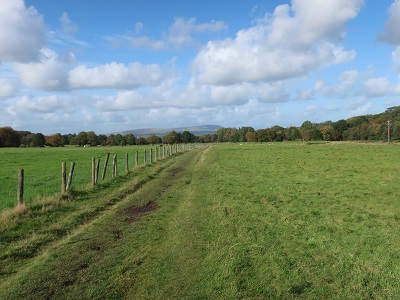
For most people living in the towns and cities of Lancashire the countryside is not a great distance away – just a short car journey or bus ride. But in many places it is even closer than that. Rivers, canals, disused railways and cycleways provide excellent opportunities for walking in what seem at first glance, unpromising townscapes. In general the linear nature of this type of walking necessitates use of public transport if the less interesting "there and back" option is to be avoided.
The five routes described are examples of this type of walk. Many tourist information offices have more detailed guides/leaflets, mostly free of charge, and of course will carry bus/train timetables.
Walk 1: Bamber Bridge to Preston along Route 55
Walk 2: The Lune Bridges
Walk 3: Accrington Greenway
Walk 4: Lancaster to Conder Green
Walk 5: Burscough to Appley Bridge
Please Note: Page breaks have been inserted to help with printing these 5 walks. If you wish to print only one of the walks then please highlight the whole of that walk before choosing print from the file menu.
Map
Walk 2: The Lune Bridges
Walk 3: Accrington Greenway
Walk 4: Lancaster to Conder Green
Walk 5: Burscough to Appley Bridge
Please Note: Page breaks have been inserted to help with printing these 5 walks. If you wish to print only one of the walks then please highlight the whole of that walk before choosing print from the file menu.
From the station turn right into Station Road. This is the B5258 and if this stretch seems unpromising, it gets worse. 600m (10minutes) along turn right into Havelock Road which then leads onto a pedestrian/cycle way Holme Road. This weaves its way through a large industrial estate, the very antithesis of country walking. At Cuerdale Way turn right. Walk past Matalan and then turn right with the roar of the A6 on left and wire mesh fence on right. After a very low railway bridge, turn left under A6 and then right onto Brownedge road.


Using the traffic island and exercising great care cross immediately before the roundabout to pick up the cycleway opposite.
Now matters begin to significantly improve.

Here you are following the line of an old railway, but now adapted to new use as a cycleway. This route forms part of the National Cycle Network – Route 55 connecting Preston to Chorley and Manchester. It also forms part of Preston Junction Local Nature Reserve. Like a portal to a different world, passing through the gate, you are presented with a pleasanter scene. After skirting a field behind a stable, the path dips down to a reedy pond, then rises to cross Todd Lane.

Exercising due care, cross Todd Lane and follow the long straight track ahead. After a stretch through a cutting dotted with ponds and hawthorn, the route passes through woodland. At Factory Lane a junction of tracks is reached. Bear to the right ahead and enter a long avenue of poplar and horse chestnut trees. This section follows the line of the Old Tramway built in 1803 by the Lancaster Canal Company to link Lancaster Canal with the rest of the canal network at Walton Summit. Competition from railways forced its closure in the middle of the 19th century. Beyond the trees to either side grassy meadows will be seen, often containing cattle – remarkable considering the bleak industrial estatescape at the walk’s beginning. On reaching the River Ribble cross the wide Old Tram Bridge into Avenham Park. Paths upwards and to the left will bring you to Avenham Lane and Preston Centre beyond. Please note the County Council have published leaflets on Old Tramway Route and Preston Junction Local Nature Reserve.
Walk 2: The Lune Bridges
Distance: 13 Km or 8¼ miles
Time: 3 - 3½ hours
Terrain: Very easy. On south bank whole length follows old railway line along cycle route. Return is less straightforward but mainly flat. There are numerous opportunities to shorten the described walk which will be indicated in the description.
Start: Lancaster Railway Station or Bus Station. This walk is highly accessible by public transport. For car users there are a number of city centre car parks. The one opposite Sainsbury's and near the bus station being the most convenient. Car users wishing to avoid car park fees might consider starting the walk at the Crook O'Lune Picnic Site and following directions from there.
Map
1. Lancaster to Crook O'Lune (6 Km or 3¾ miles: 1½ - 2 hours)
There really isn't too much to describe! From the station follow signs for the Castle and St George's Quay.
Beyond the imposing Priory Church the footpath drops down to the cycle trail.
Turn right and quickly arrive at the Millennium Bridge.
The trail is well signed with frequent information points which, where they haven't been mistreated by vandals, provide historical information on nearby points of interest. With the river on your left proceed along the well laid out cycle track - tarmac all the way to Crook O' Lune.
Beyond the two road bridges the trail enters a tree-lined section which screens you from commercial and industrial units along the A683.
After 30mins you will come to the impressive aqueduct of the Lancaster Canal that spans the river. This is well worth closer inspection and a flight of steps to the right will take you up to the canal. Designed by John Rennie and completed in 1797 it is an oft overlooked wonder of the age of canals. As you meditate and pause by its quiet waters consider that it was constructed without any of the power machinery that would have been used in taking the M6 (15mins walk upstream) across the river. It was built with manpower supplemented by some horse power. From start to finish it took just under three years at a cost of £48,000! Please be impressed! [The aqueduct also is an opportunity to shorten the walk] On completion of inspection, return to riverside and walk up to and beyond the M6 crossing. At Halton the metal road bridge is another chance to reduce the length of the walk if time is an issue.
Just beyond the bridge a well preserved railway platform building indicates the former use of the route you are following.
You are on the old Skipton to Morecambe line. In another 25 mins you will arrive at the Crook O' Lune. If time allows follow the directions up to Gray's Viewpoint. Thomas Gray of the "Elegy" fame, described the scene he saw as possessing "Every feature which constitutes a perfect landscape." Once again he is talking about Lancashire, folks!
2. Crook O' Lune to Lancaster (7 Km or 4½ miles: 2 hours.)
As the trail crosses the tight meander of the river that gives this reach its name, be prepared for a little perplexity. The line of the old railway is briefly on the north bank of the river. It then crosses the river again. Your way back to Lancaster begins at the rear of the car park for the picnic site. Incidentally there is a friendly tea bar and information point on the lower car park. You are led to a footpath walled off from the (busy) lane. At a gap in the wall look for a footpath opposite that leads down through woods to the riverbank now on your right.
This section provides some relief after the relative monotony of the cycle route. After 10mins a junction is reached. Turn left towards the river to arrive at a pier on a weir.
Nearby an information point will tell you that this is the site of the old Halton Iron Works. Continue downstream on a track that leads through an area of old workshops and then a new residential development to Halton itself. [By crossing the bridge you can regain the cycle route if desired.]
On reaching the bridge turn right into the village and then left past the Greyhound pub and keep ahead at the mini roundabout. Here you may notice some interesting castellated houses (Were they built to keep out marauding Scots?) before passing beneath the M6. Immediately after the M6 turn left onto a footpath that leads down through trees back to the river and the rear of Halton Army Camp.
Depending on when you walk there may well be various types of military activity going on, some of which may involve loud noises. As you reach the last building keep to the left of it to enter a wooded section of the trail. Soon you come to the Aqueduct.
After it turn left onto a concrete flight of stairs and then, at river level follow the sidewalk towards the city. Across the river the Ashton Memorial dominates the skyline. Beyond the rowing club the route enters the residential area of Beaumont soon to be followed by Skerton. Ahead the striking profile of the Millennium Bridge will come into view. Should you lose your way at this stage you can always ask somebody.
Walk 3: Accrington Greenway
Time: 3 hours
Terrain: Very easy gentle climb along course of cycleway for first half of walk. Across farmland, muddy in parts, for second section.
Start: St James Street. Town Centre.
At the time of writing (April 2008) there is some improvement work being undertaken at the town end of the Greenway which will probably be completed in weeks if not days. This has entailed temporary rerouting of the cycleway. For pedestrians, however, there were no impediments when the route was checked. Accrington has excellent public transport links, as well as numerous town centre cark parks. (Reached from junction 7 of M65)
Map
1.Town Centre – Lower Baxenden (3 Km or 2 miles: 1 hr)
Follow St. James Street past library, crossing Cannon Street to where it joins Eagle Street. National Cycle Network Route 6 signs will now be in evidence. (Though be aware of temporary diversions) Arriving at a new development called Waterside, follow the walkway/cycleway to the right of an artificial lake. (Presumably the old lodge of a now extinct mill). This will bring you onto Mount Street and what appears to be the start of the Greenway proper. Once on it, the town is quickly escaped, as along the course of an old railway, the tree lined corridor provides an immediate contrast to the not uninteresting townscape of minutes before.
Keep on the track and after an unusual arbour, pass under a bridge to reach a sign indicating the cycle route (No 6) turns left towards Lower Baxendale.
2.Lower Baxendale – Town Centre (7 Km or 4¼ miles: 2 hrs)
Keep left and take the track left back to the bridge and cross over the cycleway towards a handsome mock tudor house.
Pass the house and turn right onto a rough track leading upwards. At the next property keep ahead and after passing through an old gate, keep ahead to a wall crossed by a stile.
Cross the next field to a fence along the edge of a wooded dell. Views here give a sense of considerable elevation. Below right one branch of the footpath joins another by a stile. However your way is left with the dell on your right. After crossing two stiles the path drops to a footbridge.
Before crossing pause to admire the wide views. To your left the modern tech. paraphenalia of Hameldon Hill. Once across the footbridge, keep ahead with the stream on your left to where a path junction is reached. Turn left and cross the stream by another footbridge to arrive at Friar Hill Farm.
Turn right onto a track which leads you up to Haslingden Road B6236, a surprisingly busy road. Do not worry overmuch since you are on it for barely 100m. Turn right and then right again onto a track leading towards Trees Farm. Keep on the main track as it swings left and drops towards Accrington Moor. The change of habitats is immediately noticeable when you reach this remnant of upland moorland. Keep ahead and follow the track as it bears to the right before Green Howarth Golf Course. At the next junction of tracks turn left so you follow the boundary of the golf course along a good track. After the club house on the left, you quickly come to a lane. Turn right and at the next junction keep right. The track leads down to a group of cottages.
Here turn left, and follow the lane, lined by some ancient lamp posts to the little community of Bedlam. At the end of the track turn right onto Willows Lane towards Accrington. When you reach a wooden 5 barred gate on the right, go through it and follow the path through a very young plantation of birch trees.
After crossing a path at the corner of a stone wall, the route descends quite sharply down the side of an escarpment to arrive at a bench close to a stile.
Cross the stile and turn left onto a farm track. At the next junction turn left looking for a footpath sign on the right.
The path leads down towards a footbridge across a stream. Do not cross but turn left, and with the stream on your right walk into the rear of Accrington.
Be prepared for a sudden change of scene! Bear left at the mill and then turn right and right again to reach Mount Street, the start of the Greenway.
Walk 4: Lancaster to Conder Green
Total Distance: 15 Km or 9½ miles
Time: 4 hours
Terrain: Mainly easy and flat. A moderate climb from Conder Green to the canal.
Map
1. Lancaster City Centre to Conder Green (7 Km or 4½ miles: 1½ hours)
From Station Road turn left into Meeting House Lane, then right into Dallas Road. This continues into Brook Street which meets the Lancaster Canal on Aldcliffe Road. Turn right under railway bridge and join canal tow path at the metal footbridge. Road and canal keep company for another 400m.

Where the road veers off to right, follow it up a rise keeping to the right facing on coming traffic, since there is no pavement. In 250m you enter a zone of rather exclusive housing – the community of Aldcliffe. Turn right into Railway Crossing Lane looking for a footpath on the left a short distance from the junction.

A sign indicates River Lune ½ mile away. Go through metal gate. Immediately River Lune comes into sight. After 100m path crosses wooden stile, then goes through a kissing gate to follow a course enclosed by hedgrows on both sides. On reaching a wooden stile, cross it turning immediately right to follow a narrow but distinct path, with the hedge on right, down to another stile in the corner.

Using it, or a gap to its left, continue to the next stile. Ahead aim for a wall end. The duck boards to its right will lead you to yet another stile, stone steps and then the Lancashire Coastal Way.


Though the walking so far could not be characterised as difficult, it will be a relief to reach the tarmac. This is the route of the Lancaster-Glasson Dock Railway opened in 1887 and finally closed in 1964. It is now part of the National Cycle Network (Route 6) and the Millennium Park.

Turn left for Conder Green. On this stretch further direction is superfluous – just keep going for the next 3k/2miles. Ahead, the wide sweep of the Lune estuary with Glasson Dock on the opposite shore, as the river meets Morecambe Bay. To the right the monolithic blocks of Heysham Power station. On reaching the car park keep to the left and follow it past Conder Green Farm to the Stork – if you have timed it right, a good place for refreshment. (See below)
Conder Green to Lancaster (8 Km or 5 miles: 2 hours)
From the Stork turn right onto A588 and then left onto small before a stone bridge. As the lane bends to right on a junction take a footpath opposite.

Cross stile and walk up field with buildings on right. Keep straight and go through wooden gate, taking care to secure it as horses are often kept in the next field. With the hedge on your right aim towards the copse before you. In the corner you will find a stile. Cross this and the stone footbridge beyond it. With the copse on your left pass through a squeeze stile.

Over gently rising ground climb over a metal ladder stile next to a metal gate. Keep straight with hedge on left, heading in the direction of an electricity pylon. Ahead a large farm complex comes into view.

After crossing a stone stile, pass between two buildings reaching a stony track beyond a metal gate. Keep aiming for the pylon with hedge on right. When the track swings right follow it through a metal gate into the adjoining field about 100m before the pylon. Turn immediately left and drop down between two oaks to a wooden stile crossing a wire fence. The way begins to rise between two hedges, reaching a metal ladder stile.

Cross this and with the hedge on your left climb the next rise. Ahead the University of Lancaster with the Bowland Fells as a backdrop – in the foreground a wood – Forerigg Wood in fact. Cross a wooden stile to enter it and another to exit it 100m ahead. The path turns right skirting the edge of the wood.

Ahead you will see another stile bringing you onto the Lancaster Canal.

Turn left for Lancaster. This stretch of the canal is particularly attractive, especially the wooded section of Deep Cutting close to Ashton Road (A588) Bridge. Enjoy it as you amble back to the station.


The Stork
This justly popular inn has been serving travellers since 1660. As one would expect from a place that can trace its antecedents back to the Restoration, it possesses - character.

Lunch was enjoyed in a wood panelled nook before a blazing fire – a warm welcome after a drenching shower early in the walk. Three cask ales were on offer – Marston’s Pedigree (4.5%), Black Sheep (3.8%) and Timothy Taylor Landlord (4.3%). (During the busy summer season two additional guest ales are put on.) Today Timothy Taylor was the unanimous choice and what a good choice. Unusually an extra half was enjoyed before commencing the second stage of the walk.

Walk 5: Burscough to Appley Bridge
Distance: 11 Km or 7 miles
Time: 2½ hours
Terrain: Very easy towpath walk.
Map
Burscough Bridge to Appley Bridge (9k or 5 ½ miles: 1 hour 50 minutes)
From the station walk up to the main A59 Liverpool Road and turn right. In 300m reach the canal bridge. Take access road on left to reach tow path. Turn left under bridge 32A. Now walk towards Appley Bridge. At Parbold in 5k/3miles 1 hour the tow path switches sides and so could be seen as a natural break for refreshment. (See below)
The section from Parbold to Appley Bridge is a particularly attractive reach.

On the left the wooded slopes of Parbold Hill come down to the water’s edge, while on the right views open up to the south across the valley towards Ashurst Beacon. Beyond a series of locks you will come to bridge 42.

Walk up to the lane, turn left over the bridge and walk up to the station 200m on the right.
The Windmill
The first time we did this walk we completely missed the Windmill. We came off the canal at Parbold and turned left, proceeding into the village and to the Railway public house. We had a pleasant lunch (omelettes) but had to make do with a pint of smooth flow beer as the Railway does not serve cask ales. Nevertheless we found a warm welcome in a pleasant pub.
On our second visit we looked to the right and there was the Windmill, only a few yards away.
The main body of the pub was built in 1794 as a grain store for the mill. The pub itself has low ceilings and wood beams. It is full of brass of all types such as vases, plates, jugs, plaques and more.
The ends of a couple of the seats are 'Mousy Thompson' (famous 19th century church furniture maker) pew ends (properly verified as the same), complete with his trade mark carved mouse. (He originally chose a mouse as his trade mark because he was 'as poor as a church mouse'.
The Mersey Motor Boat club meet here at August bank holiday each year, with many boats moored outside on the canal. This would be an interesting time to visit.
For lunch we had a very pleasant toasted steak sandwich with side salad and chips but the highlight for us was the cask ale. The Windmill was serving 3 cask ales. Tetley bitter(3.7%), J.W. Lees bitter(4%) and Wells Bombardier(4.3%). We chose the Tetleys and the J.W. Lees bitters. These are both traditional darker bitters and were served in excellent condition, as witnessed by the rings on the sides of our glasses once we had emptied them in the time honoured manner.